


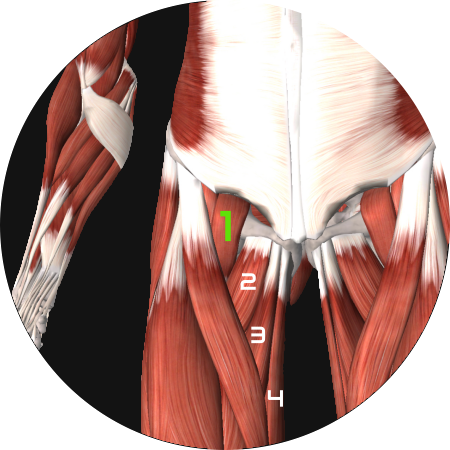
Superficial Fibers
Origin: sides of vertebral bodies of &12-L4 (9) 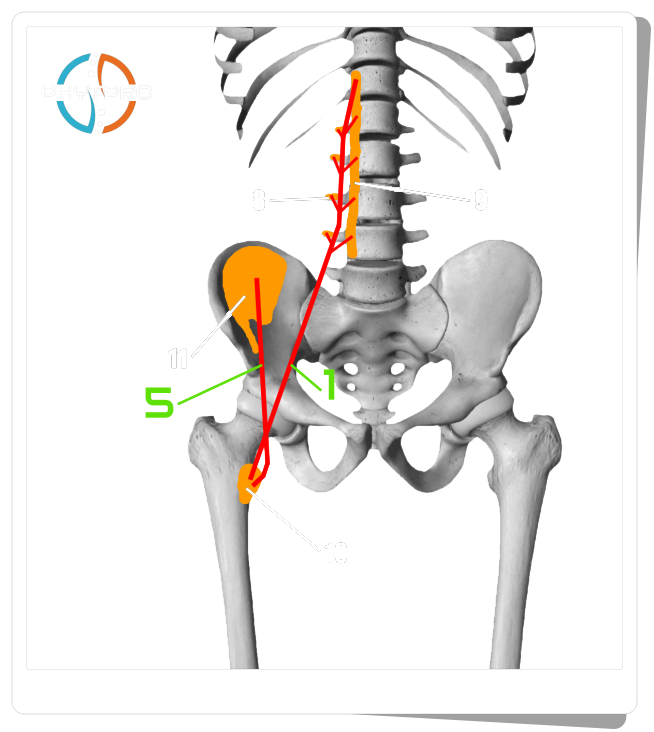
Deep Fibers
Origin: Transverse Processes of L1-L5 vertebrae (8)
Insertion: Lesser Trochanter of the Femur (10)
Actions: different actions depending to the thigh position
- open chain: Flexion, Adduction and Lateral Rotation of the thigh
- closed chain: Flexion and Lateral Flexion of the trunk
Helping Synergist Muscles:
- together with Sartorius, Rectus Femoris, tensor Fascia Latae, Pectineus (2), Adductor Magnus, Adductor Longus joins to produce the thigh Flexion
- with Adductors, Gluteus Maximus, Hamstrings and Pectineus the thigh Adduction
- with Gluteus Maximus, Gluteus Medius, Rectus Femoris, Adductor Magnus and Adductor Brevis (6) the thigh Lateral Rotation
- together with Quadratus Lumborum joins to produce the Lateral Flexion of the trunk
Notes: together with the Iliac (5) muscle forms the Ileopsoas muscle (look at the image on the right), the most powerfull thigh flexor. It stabilizes the vertebral column by maintaining the lumbar lordosis. Together with Iliacus, Pectineus and Adductor Longus forms the floor of Femoral Triangle.