


Why are some athletes naturally suited for endurance events while others excel in sprinting or explosive movements? How much depends on genetics, and how much can be influenced by training? The answer lies largely in muscle fibers, the specialized cells responsible for producing force and movement.
Understanding their structure and function is essential for anyone interested in sports performance, rehabilitation, or exercise science. Although genetics plays an important role, modern research shows that skeletal muscle is remarkably adaptable. Training can significantly modify the functional characteristics of muscle fibers, improving strength, power, endurance, and efficiency.
What are muscle fibers?
Skeletal muscle is composed of thousands of elongated cells known as muscle fibers. Unlike most cells in the human body, these fibers can extend for several centimeters and contain multiple nuclei. Inside each muscle fiber are numerous myofibrils, which in turn consist of repeating contractile units called sarcomeres. Within the sarcomere, the interaction between the proteins actin and myosin produces muscle contraction through the sliding filament mechanism.
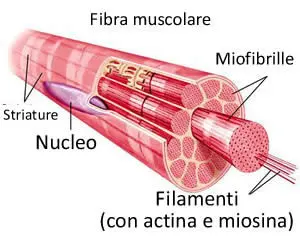
However, muscles do not function as isolated fibers. They are organized into motor units, each consisting of a motor neuron and all the muscle fibers it innervates. When the nervous system activates a motor neuron, every fiber belonging to that motor unit contracts simultaneously.
The modern classification of muscle fibers
For many years, muscle fibers were simply described as red and white fibers. While useful as a basic concept, this classification is now considered overly simplistic. Current physiology identifies three main functional categories.
Type I fibers (Slow-Twitch)
Type I fibers are highly resistant to fatigue and rely primarily on aerobic metabolism. They are characterized by:
- abundant mitochondria
- rich capillary supply
- high myoglobin content
- efficient oxygen utilization
Although they generate relatively low force, they can sustain activity for prolonged periods. These fibers are predominant in endurance sports such as marathon running, cycling, cross-country skiing, and triathlon.
Type IIa fibers
Type IIa fibers combine characteristics of both endurance and power-oriented fibers. They produce greater force than Type I fibers while maintaining a moderate resistance to fatigue. Their metabolism can efficiently utilize both aerobic and anaerobic pathways. Because of their versatility, they play a crucial role in many team sports requiring repeated high-intensity efforts.
Type IIx fibers
Type IIx fibers are the fastest and most powerful muscle fibers. Their characteristics include:
- extremely rapid contraction speed
- high force production
- predominantly anaerobic metabolism
- limited fatigue resistance
They are particularly important in activities requiring explosive performance, such as sprinting, jumping, throwing, and Olympic weightlifting.
Genetics and training: are muscle fibers predetermined?
One of the most common questions in sports science is whether athletes are born or made. The answer is both.
Genetics strongly influences the proportion of different muscle fiber types, partly explaining why some individuals naturally perform better in endurance events while others excel in explosive disciplines. Nevertheless, training induces substantial adaptations:
- increased force production
- improved neuromuscular efficiency
- enhanced metabolic capacity
- structural remodeling of muscle tissue
Current scientific evidence suggests that while complete conversion between slow- and fast-twitch fibers is limited, significant adaptations can occur, particularly among fast fiber subtypes.
Motor unit recruitment
The nervous system does not recruit all muscle fibers simultaneously. According to the Size Principle described by Elwood Henneman, smaller motor units—primarily containing fatigue-resistant fibers—are activated first. As force requirements increase, progressively larger motor units containing faster and more powerful fibers are recruited.
This mechanism explains why high-intensity training is necessary to fully stimulate the neuromuscular system and maximize strength and power development.
Adaptations to training
Different forms of training produce different physiological adaptations.
Strength training
Strength training promotes:
- muscle hypertrophy
- improved neural recruitment
- increased maximal force production
Power training
Explosive exercises enhance:
- rate of force development
- neuromuscular coordination
- power output
Endurance training
Endurance exercise increases:
- mitochondrial density
- capillary network development
- oxidative capacity
- metabolic efficiency
These adaptations improve the ability to sustain prolonged exercise while delaying fatigue.
Practical applications
Understanding muscle fiber physiology has important implications for training design.
A sprinter should not train like a marathon runner, just as an endurance athlete should not follow the same program as a weightlifter. In team sports, athletes require a balanced combination of strength, power, speed, and endurance. Consequently, training programs should be tailored to the specific demands of the sport, the competitive season, and the individual characteristics of the athlete.
Conclusion
Muscle fibers are fundamental components of human movement and athletic performance. Their characteristics help explain why individuals respond differently to exercise and why different sports demand distinct physiological qualities.
Although genetics provides the foundation, training remains a powerful stimulus capable of producing significant functional adaptations. For coaches, physiotherapists, and Sports Science students, understanding muscle fiber physiology is essential for designing effective training programs and optimizing performance.
References:
- American College of Sports Medicine (ACSM)
- NSCA – Essentials of Strength Training and Conditioning
- McArdle WD, Katch FI & Katch VL – Exercise Physiology
- Guyton & Hall – Textbook of Medical Physiology
- Lieber RL – Skeletal Muscle Structure, Function, and Plasticity