


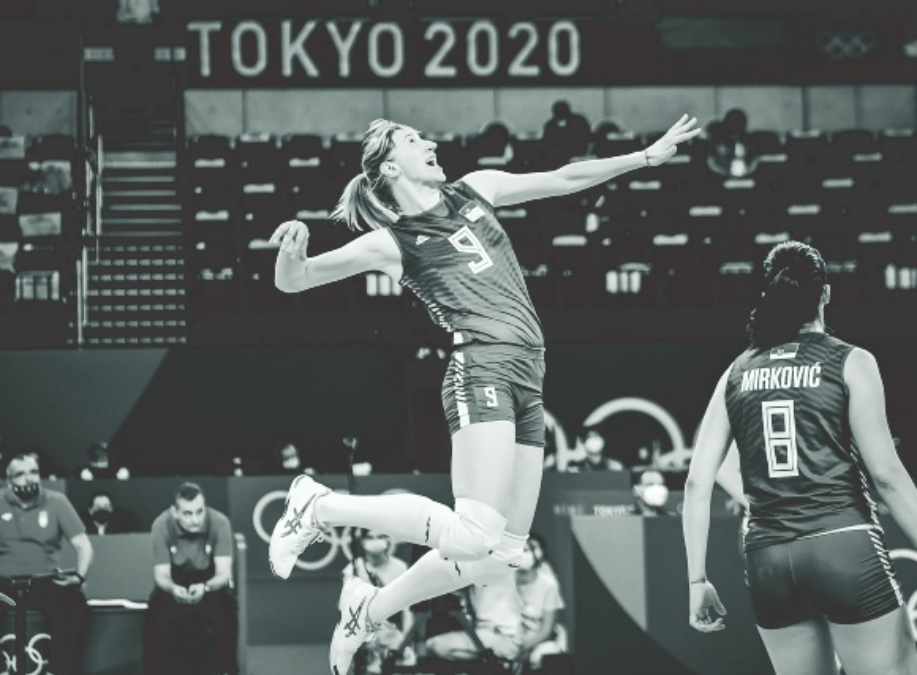
(Written by Daniele Alpi - Volleyball Strength&Conditioning Coach)
It is not uncommon to encounter volleyball players who do not report shoulder pain but present a noticeable hollow in the posterior aspect of the scapula. A more careful assessment often reveals reduced strength during shoulder external rotation, accompanied by compensatory activation of the ramaining rotator cuff muscle and, in some cases, even the trunk musculature.
Because symptoms may be minimal or absent, this condition can easly go unnoticed. However, as with any muscular imbalance, it may eventually contribute to exercise fatigue, altered movement patterns and shoulder discomfort. Implementing an appropriate recovery strategy can help restore neuromuscular efficiency and improve glenohumeral joint stability.
Introduction
Unilateral Infraspinatus muscle atrophy is a relatively common finding in overhead sports, particularly in high-level volleyball players. Studies have reported prevalence rates ranging from approximately 12% to 34% depending on the population examined.
The condition does not appear to be strongly related to age and may affect both male and female athletes. Some studies have reported a higher incidence in male players, likely due to the greater forces and velocities generated during attacking and serving actions.
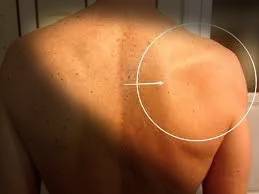
From a clinical perspective, the most obvious sign is a visible depression below the scapular spine, indicating a reduction in the volume of the Infraspunatus muscle. Many athletes remain completely asymptomatic. Others may experience:
- shoulder fatigue after training sessions or competition
- reduced strength during external rotation
- altered scapulohumeral control
- pain during overhead activities
- reduced efficiency during attacking and serving actions
When Infraspinatus is unable to perform its stabilizing role effectively, the humeral head may lose part of its dynamic control within the glenoid, increasing the workload placed on other structures of the rotator cuff.
Why does it occur
The condition is most commonly associated with irritation or dysfunction of the suprascapular nerve.
During repetitive overhead actions such as serving and spiking, the nerve may be exposed to repeated traction or compression forces. Over time, the mechanical stress can contribute to neuropathy and reduced activation of the Infraspinatus muscle. Potential contributing factors include:
- compression of the nerve at the suprascapular or spinoglenoid notch
- repetitive microtrauma caused by a high volume of overhead actions
- excessive training loads with insufficient recovery
- altered shoulder and scapular biomechanics
Some research suggests that certain serving techniques, particularly the float serve, may place stress on the shoulder complex. Nevertheless, total training volume and individual athlete characteristics remain important factors.
Whenever suprascapular neuropathy is suspected, referral to an orthopedic specialist or sports medicine physician is recommended. Electromyography (EMG) remains one of the most useful tools for confirming nerve involvement and assessing the degree of muscular impairment.
Practical training consideration
Infraspinatus atrophy does not necessarily compromise athletic performance in the short term. Many volleyball players continue to train and compete at a high level despite significant reductions in muscle volume. However, allowing the condition to persist may encourage compensatory movement strategies and increase stress on other shoulder structures.
The primary goals of training shoulder therefore be:
- improving neuromuscular recruitment
- maintaining shoulder mobility
- strengthening the rotator cuff
- enhancing scapulohumeral stability
- reducing compensatory movement patterns
A collaborative approach involving the strength and conditioning coach, physiotherapist and medical staff is strongly recommended. Wherever possible, rehabilitation should begin during the off-season or during periods in which serving and spiking volume can be temporarily reduced.
Phase 1 (week 1 & 2)
The primary objective of the first phase is to improve neuromuscular awareness and control. Rather than focusing on strength development, athletes should learn to activate and control the Infraspinatus more effectively. Isometric contraction lasting 6 to 10 seconds can be performed with short recovery periods, accumulating approximately one minute of work per set.
Suggested exercises
- external rotation against a fixed surface (e.g. a wall) with the arm adducted
- external rotation against fixed surface with 30 degrees of abduction
- external rotation against fixed surface with 45 degrees of abduction
- forward pressure against a wall with the elbow flexed to 90 degrees
- shoulder flexion while maintaining proper scapular and humeral alignment
The position at 30 and 45 degrees of abduction within the scapular plane are particularly useful because they tend to maximize Infraspinatus involvement.
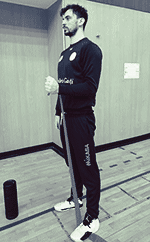
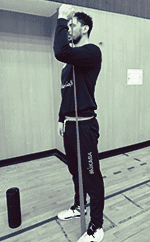
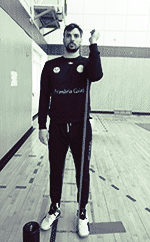
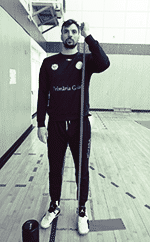
(2.Starting position) (2.Final position) (2.Correct) (2."fall" inwards)
During all exercises, compensatory activation of the posterior deltoid, upper trapezius and trunk should be minimized.
Mobility and stretching
Maintaining adequate mobility is also important during this phase. Particular attention should be given to:
- scalenes
- sternocleidomastoid
- upper trapezius
- rhomboids
- pectoralis major and minor
- posterior shoulder capsule
Good mobility supports more efficient scapulohumeral mechanics during overhead activities.
Phase 2 (week 3 & 4)
If improvements in motor control and movement quality are observed during the first phase, more dynamic strengthening exercises can be introduced. The goal becomes improving the ability of the rotator cuff to stabilize the humeral head during movement.
Suggested exercises
- external rotation with resistance bands at 0, 30, 45 degrees of abduction
- external rotation with the arm abducted to 90 degrees and the elbow flexed to 90 degrees
- scapulohumeral stabilization exercises performed on unstable surfaces
- quadruped weight-shifting exercises
- wall stabilization drills using a ball
- shoulder flexion exercises while maintaining isometric external rotation using an elastic band
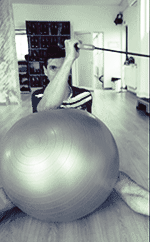
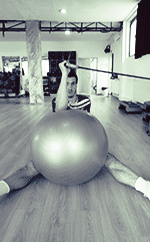
(Starting position) (Final position)
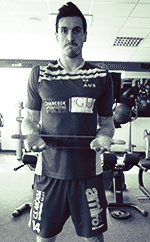
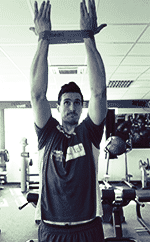
(Starting position) (Final position)
Progression should always be gradual and based on movement quality rather than load alone.
Final consideration
Infraspiunatus muscle atrophy is a relatively common condition among volleyball players and other overhead athletes. Early identification and an appropriate strategy can help reduce compensatory patterns, improve shoulder function and preserve long-term joint health. Even when complete restoration of muscle volume is not possible, improvements in neuromuscular control and scapulohumeral stability can allow athletes to maintain high levels of performance while reducing the risk of secondary shoulder problems.
References:
- Cummins CA, Messer TM, Nuber GW. Suprascapular Nerve Entrapment.
- Ferretti A, Cerullo G, Russo G. Suprascapular Neuropathy in Volleyball Players.
- Kibler WB, Sciascia A. Current Concepts: Scapular Dyskinesis.
- Cools AM et al. Prevention and Rehabilitation of Shoulder Injuries in Overhead Athletes.
- Wilk KE et al. Rehabilitation of the Overhead Athlete's Shoulder.
- Neumann DA. Kinesiology of the Musculoskeletal System.
- Magee DJ. Orthopedic Physical Assessment.