


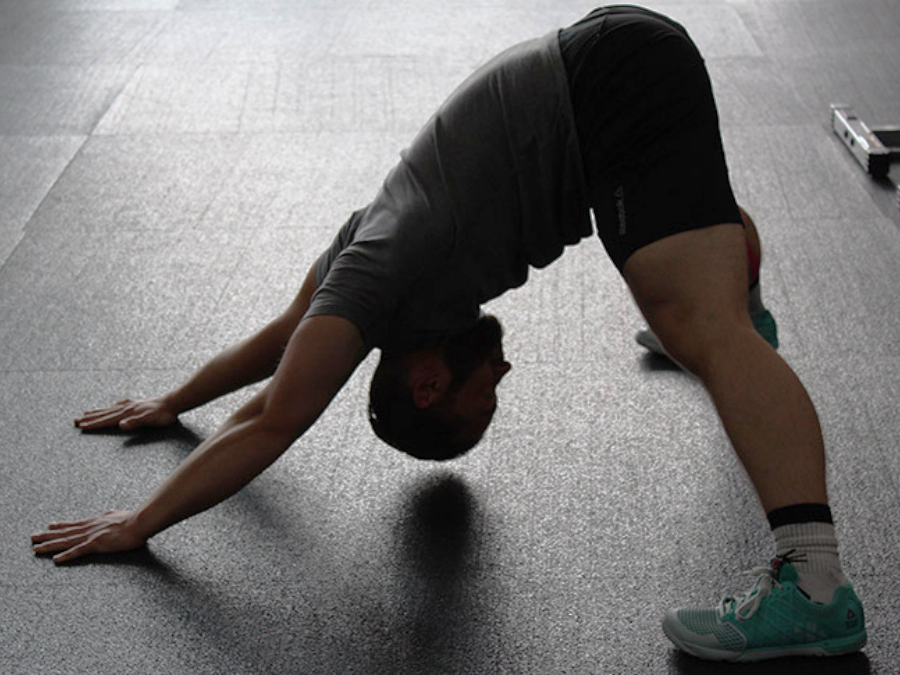
(written by Daniele Alpi - Strength&Conditioning Coach)
Stretching is probably one of the most widely used and debated practices in the world of sport. For decades it was considered an essential part of every warm-up routine and a fundamental tool for injury prevention.
More recently, however, scientific research has challenged several of these beliefs, leading to ongoing discussions among coaches, strength and conditioning specialists, physiotherapists and researchers. As is often the case, the truth lies somewhere in the middle. Stretching is neither a miracle solution nor a useless practice. It is simply a tool that should be used at the right time and for the right purpose.
What happens to muscles and tendons during Stretching?
When we perform a stretching exercise, we are not acting solely on the muscle itself. The entire muscle-tendon unit is exposed to a stretching force that affects:
- Muscle fibers
- Tendons
- Connective tissue
- Fascia
- The nervous system
For many years it was believed that stretching increased flexibility primarily by permanently lengthening tissues. Today we know that the process is more complex. In the short term, much of the increase in range of motion appears to result from changes in stretch tolerance. In other words, the nervous system gradually becomes more comfortable with larger joint positions and movement amplitudes. In the long term, especially when performed consistently, stretching may contribute to structural adaptations and improvements in joint mobility. Tendons are also affected during stretching. However, tendons respond primarily to progressive mechanical loading and strength training. For this reason, stretching should not be considered the main strategy for improving tendon function or load capacity.
Stretching and warm-up: are they the same thing?
One of the most common misconceptions is that stretching "warms up" the muscles. The primary goal of a warm-up is actually to gradually increase:
- Body temperature
- Muscle temperature
- Blood flow
- Nerve conduction velocity
- Movement efficiency
These adaptations are best achieved through active movement. Light running, dynamic drills, movement preparation exercises, skipping, changes of direction and sport-specific activities are generally more effective at increasing muscle temperature than static stretching. For this reason, modern warm-up protocols place much greater emphasis on dynamic movement than they did in the past.
Stretching and athletic performance
One of the most studied topics in sports science is the effect of stretching on strength and power production.
Research has consistently shown that prolonged static stretching performed immediately before explosive activities may temporarily reduce force, speed and power output. This effect depends on several factors:
- Duration of the stretch
- Intensity
- Muscle group involved
- Type of activity performed afterward
It is important to note that these reductions are generally small and are mainly observed when stretches are held for relatively long periods. As a result, prolonged static stretching immediately before sprinting, jumping or explosive sports activities is now approached with greater caution.
Stretching and recovery
Another frequently discussed topic is the role of stretching in recovery.
For many years it was believed that stretching helped remove lactic acid and prevent muscle soreness after exercise. More recent evidence has challenged these assumptions. Currently, there is little evidence to suggest that stretching significantly reduces Delayed Onset Muscle Soreness (DOMS), the muscle discomfort that typically appears between 24 and 72 hours after intense exercise. This does not mean that stretching has no place in post-training routines. Many athletes report improved feelings of relaxation and mobility after stretching, which may still provide practical benefits.
Common myths about Stretching
Stretching prevents all injuries
False.
Injuries are multifactorial. Strength levels, workload management, recovery, movement quality and overall physical condition likely play a much greater role.
Stretching always improves performance
False.
Its effects depend on the type of stretching, the timing and the demands of the sport.
Stretching eliminates muscle soreness
False.
While it may improve perceived comfort, stretching is not an effective stand-alone strategy for preventing DOMS.
What we know today
Current evidence suggests that:
- Stretching improves range of motion
- It can be beneficial in sports requiring high levels of flexibility
- It may improve an athlete's perception of mobility and well-being
- Prolonged static stretching before explosive activities may temporarily reduce performance
- Modern warm-ups should rely primarily on dynamic movement
From theory to practice
Practical experience suggests that stretching still has an important role within athletic preparation. Rather than asking whether stretching is useful or useless, it is more appropriate to ask when and why it should be used.
In general:
- Before training and competition, dynamic movement is usually preferred
- Static stretching can be included in dedicated mobility sessions
- Stretching may be useful in certain rehabilitation programs
- Athletes involved in sports requiring large ranges of motion may benefit from regular flexibility work
From a practical standpoint, stretching remains a valuable complement to athletic preparation, particularly when scheduled strategically throughout the training week rather than used automatically as the primary warm-up method.
Conclusions
Stretching is a tool, not a goal. When used appropriately, it can help maintain mobility and movement quality. When used at the wrong time, it may provide little benefit or even temporarily interfere with performance. As with every training method, effectiveness depends on matching the right strategy to the desired outcome.
References:
- Alter MJ. Science of Flexibility.
- Behm DG, Chaouachi A. A review of the acute effects of static and dynamic stretching on performance.
- Kay AD, Blazevich AJ. Effect of acute static stretch on maximal muscle performance.
- Witvrouw E et al. Stretching and injury prevention.
- Shrier I. Does stretching improve performance? 6.Behm DG et al. Canadian Society for Exercise Physiology Position Statement on Stretching.