


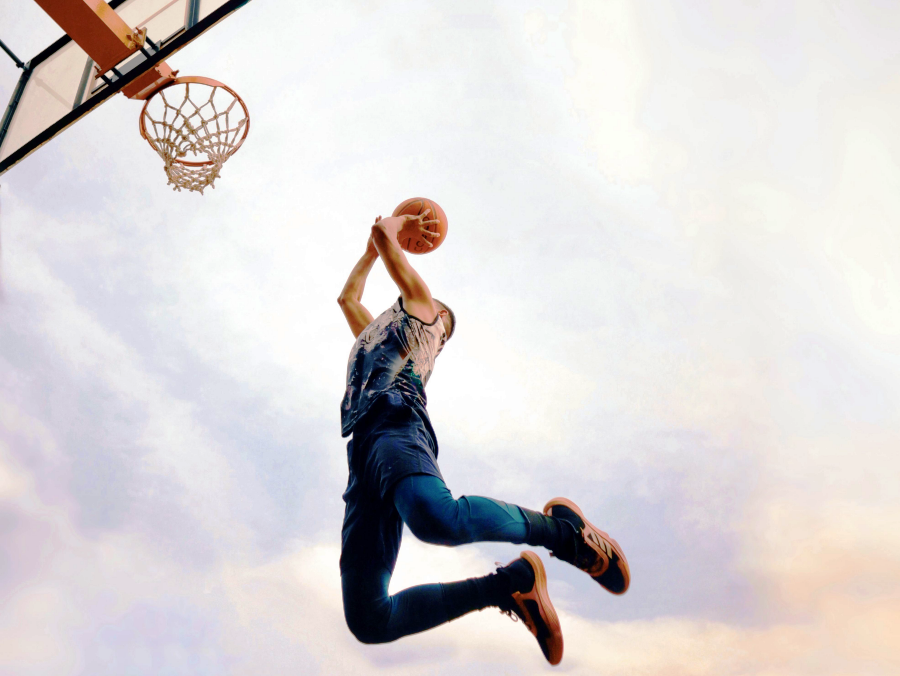
Patellar tendinopathy, commonly known as Jumper's Knee, is one of the most frequent overuse injuries observed in sports involving repetitive jumping, sprinting and rapid changes of direction. Although the condition is strongly associated with volleyball and basketball, it is also common among soccer players, track and field athletes and many other sports that expose the knee extensor mechanism to high mechanical loads.
Over the past two decades, our understanding of this condition has changed considerably. It was once regarded primarily as an inflammatory disorder, but current evidence suggests that chronic tendinopathy is largely characterized by alterations in tendon structure and remodeling rather than by a persistent inflammatory process.
The Patellar Tendon: A Key Structure for Athletic Performance
The patellar tendon connects the patella to the tibial tuberosity and functions as the continuation of the quadriceps tendon. Together they form the knee extensor mechanism, allowing athletes to jump, sprint, decelerate and change direction efficiently. During explosive movements, the tendon is subjected to substantial tensile forces. Under normal circumstances, it adapts to these loads through continuous remodeling. However, when the mechanical demand exceeds the tendon's capacity to adapt, symptoms may develop.
This concept—often described as the balance between load and capacity—is now central to the understanding of modern tendinopathy management.
Why Does Jumper's Knee Develop?
Patellar tendinopathy is rarely the consequence of a single traumatic event. Instead, it usually results from the accumulation of repetitive mechanical stress over time. Several factors may contribute to its development:
- sudden increases in training volume or intensity
- a high number of jumps and landings
- insufficient recovery between sessions
- deficits in lower-limb strength
- reduced ankle or hip mobility
- poor jumping or landing mechanics
- previous lower-limb injuries
For this reason, prevention and rehabilitation should focus not only on reducing load but also on improving the athlete's capacity to tolerate it.
Clinical Presentation
The hallmark symptom is localized pain at the inferior pole of the patella, where the tendon originates. In the early stages, discomfort often appears at the beginning of activity, decreases during exercise and returns after training. As the condition progresses, pain may persist throughout activity and eventually interfere with daily tasks and athletic performance. Athletes frequently report stiffness after periods of rest and tenderness on palpation of the tendon.
Does Pain Always Mean Inflammation?
One of the most important paradigm shifts in sports medicine concerns the interpretation of tendon pain. Current research indicates that many chronic tendinopathies involve collagen disorganization, changes in tendon cells and alterations of the extracellular matrix rather than a simple inflammatory process. Consequently, strategies aimed solely at reducing inflammation are often insufficient to restore tendon function in the long term.
Is Complete Rest the Best Solution?
In most cases, complete rest is not considered the optimal approach. Although reducing activity may temporarily decrease symptoms, prolonged unloading can also reduce the tendon's capacity to tolerate future mechanical demands.
Modern rehabilitation therefore emphasizes load management, modifying activities while maintaining an appropriate mechanical stimulus that promotes tendon adaptation.
The Role of Therapeutic Exercise
Exercise-based rehabilitation is currently regarded as the cornerstone of conservative treatment. Depending on the athlete and the stage of the condition, rehabilitation may include:
- isometric exercises for symptom modulation
- Heavy Slow Resistance training
- progressively loaded eccentric exercises
- functional strengthening exercises such as squats and lunges
- gradual reintroduction of running, jumping and sport-specific movements
There is no universal rehabilitation protocol. Progression should always be individualized according to symptoms, functional capacity and sporting demands.
Return to Sport
Returning to sport should not be based solely on the absence of pain. Instead, clinicians and performance staff should evaluate whether the athlete has regained:
- adequate lower-limb strength
- the ability to perform jumping and landing tasks efficiently
- tolerance to sport-specific loading
- stable symptoms during and after training sessions
Training volume and intensity should then be progressively increased while monitoring the tendon response over the following 24 hours.
Prevention
Effective prevention relies primarily on appropriate load management. Important strategies include:
- gradual progression of training loads
- regular lower-limb strength training
- maintaining adequate mobility
- ensuring sufficient recovery between sessions
- monitoring symptoms during periods of increased workload
For athletes involved in jumping sports, consistent strength and neuromuscular training remain among the most effective strategies for reducing the risk of patellar tendinopathy.
Conclusions
Jumper's Knee should no longer be viewed simply as an inflammatory condition but rather as a complex disorder in which tendon adaptation and mechanical loading play a fundamental role.
Early recognition, appropriate load management and a progressive rehabilitation program allow most athletes to safely return to sport while minimizing the risk of recurrence.
References:
- Brukner & Khan's Clinical Sports Medicine. McGraw-Hill Education. Latest edition.
- Cook & Purdam Continuum Model of Tendinopathy. Cook JL, Purdam CR. Is tendon pathology a continuum? A pathology model to explain the clinical presentation of load-induced tendinopathy. British Journal of Sports Medicine. 2009;43(6):409-416.
- Malliaras P, Barton CJ, Reeves ND, Langberg H.
Achilles and patellar tendinopathy loading programmes: a systematic review comparing clinical outcomes and identifying potential mechanisms for effectiveness.
Sports Medicine. 2013;43(4):267-286. - Rio E, Kidgell D, Purdam C, et al.
Isometric exercise induces analgesia and reduces inhibition in patellar tendinopathy.
British Journal of Sports Medicine. 2015;49(19):1277-1283. - van Ark M, Docking SI, van den Akker-Scheek I, et al.
Does the adolescent patellar tendon respond to 5 days of cumulative load during a volleyball tournament?
Scandinavian Journal of Medicine & Science in Sports. 2016. - Docking SI, Cook JL.
Tendon structure changes after loading are related to changes in tendon hydration: a systematic review.
British Journal of Sports Medicine. - Khan KM, Scott A.
Mechanotherapy: how physical therapists' prescription of exercise promotes tissue repair.
British Journal of Sports Medicine. 2009. - Silbernagel KG, Crossley KM.
A proposed return-to-sport program for patients with midportion Achilles and patellar tendinopathy.
Journal of Orthopaedic & Sports Physical Therapy. 2015. - Journal of Orthopaedic & Sports Physical Therapy (JOSPT).
Clinical practice recommendations for the management of patellar tendinopathy.
How we manage it in Practice
The following example reflects an approach frequently adopted in our daily work with athletes. It is not intended as a universal rehabilitation protocol and should always be individualized according to the athlete, the sport and the stage of rehabilitation.
Whenever symptoms allow, our objective is not to eliminate load completely but to make it manageable while preserving the tendon's ability to adapt.
Before technical training, we often include a short preparation routine lasting approximately 10–15 minutes:
- 5 minutes of low-intensity cycling or brisk walking
- glute and hamstrings muscles activation (2 exercises)
- Spanish Squat isometric holds: 4/5 sets of 30/45 seconds, with 90 seconds of recovery (recovery time will be decreased when sympthoms allow)
- controlled squats with moderate load: 2 sets of 8 repetitions, emphasizing slow eccentric execution;
- step-up or step-down exercises: 2 sets of 8–10 repetitions per leg;
- gradual progression toward low-level plyometrics and finally sport-specific jumping activities.
Throughout the process, we monitor the athlete's response during the following 24 hours. Rather than pursuing complete absence of pain, our goal is to progressively increase the tendon's capacity to tolerate the mechanical demands of training and competition while reducing the likelihood of recurrence.